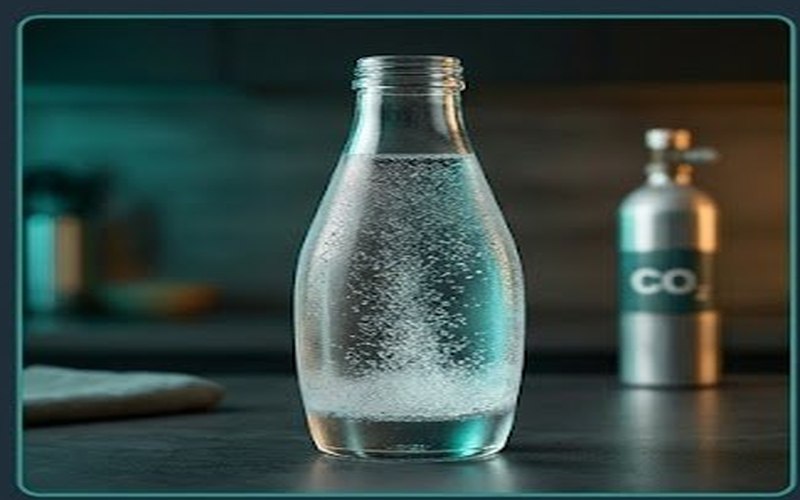
Drinkmate OmniFizz — Carbonate Any Beverage
Unlike standard SodaStream machines, the Drinkmate OmniFizz is designed to safely carbonate any liquid — juice, wine, cocktails, cold brew — not just water. Uses standard 60L CO₂ cylinders and third-party refills.
View on Amazon →As an Amazon Associate, FizzHomeLab earns from qualifying purchases.
The Real Cost Per Liter
Cost comparisons between home carbonation and store-bought water are frequently misleading because they compare the wrong things. SodaStream marketing compares against premium sparkling water brands at $1.50+ per liter. Critics compare against store-brand seltzer at $0.39 per liter. The honest comparison depends on what you actually buy and how much you drink.
| Option | Cost Per Liter | Assumptions |
|---|---|---|
| Topo Chico (glass bottle) | $1.40–$2.00 | Typical retail pricing, ~11 oz bottle |
| San Pellegrino (glass) | $1.20–$1.80 | Typical retail 1L pricing |
| Perrier (glass) | $1.00–$1.50 | Typical retail pricing |
| LaCroix / Bubly (12-pack cans) | $0.55–$0.75 | 12 × 12 oz cans, typical grocery price |
| Store-brand seltzer (plastic 1L) | $0.30–$0.50 | Generic or store brand |
| SodaStream + official cylinder exchange | $0.17–$0.30 | Machine amortized over 3 years, $18 cylinders, 60L/cylinder |
| SodaStream + 3rd-party refill | $0.08–$0.15 | Machine amortized, $8 homebrew shop refills |
| SodaStream + 5 lb tank upgrade | $0.04–$0.08 | Hardware amortized over 2 years, $12 CO₂ refills |
The key takeaway: home carbonation is cheapest compared to premium glass-bottle sparkling water, and only marginally cheaper than store-brand seltzer if you use official SodaStream cylinders. The real savings unlock when you use third-party refills or upgrade to a larger CO₂ tank.
Use the CO₂ Cost Calculator to see the exact numbers at your usage level and local prices.
Break-Even Analysis by Setup
Hardware costs vary significantly by setup. Here is how long each option takes to pay for itself compared to buying LaCroix at $0.65/liter — a fair midpoint comparison:
| Setup | Hardware Cost | Daily Usage | Break-Even (vs. $0.65/L) |
|---|---|---|---|
| SodaStream Terra + official cylinders | ~$100 | 1L/day | ~9–12 months |
| SodaStream Terra + homebrew refills | ~$100 | 1L/day | ~6–8 months |
| SodaStream + 5 lb tank upgrade | ~$200 total | 1L/day | ~10–14 months |
| SodaStream + 5 lb tank upgrade | ~$200 total | 2L/day | ~5–7 months |
| Aarke Carbonator Pro + homebrew refills | ~$200 | 1L/day | ~12–16 months |
The math gets more favorable as daily consumption increases. At 0.25L per day (a single glass), the break-even stretches to 2+ years and may not be worth it. At 2L+ per day for a household, payback happens quickly and the ongoing savings are substantial — easily $100–$200 per year after break-even.
Taste: What You Can and Cannot Match at Home
This is where honest comparison matters most. Home carbonation can match commercial sparkling water in some ways and genuinely cannot in others. Understanding the difference saves frustration.
What Home Carbonation Can Match
Carbonation level: You can precisely match the CO₂ volume of any commercial sparkling water. Topo Chico at approximately 4.0 volumes CO₂ can be matched at home with 20–22 PSI at 38°F. San Pellegrino at ~2.5 volumes can be matched at 12–14 PSI. The carbonation itself is identical chemistry.
Plain sparkling water satisfaction: For people who drink sparkling water as a still-water alternative — just wanting hydration with bubbles — home carbonation is entirely satisfying. The carbonation experience is the same; the slight mineral differences are not noticeable at casual drinking.
Flavored sparkling water: Home-made syrup sodas can be dramatically better than commercial flavored seltzers. A fresh-ginger ginger ale made from real ginger syrup carbonated at home is in a completely different category from a can of Canada Dry.
What Home Carbonation Cannot Match (Without Effort)
Mineral character of spring waters: San Pellegrino, Topo Chico, and Perrier get their distinctive taste from the specific minerals dissolved in their source water — calcium, magnesium, bicarbonate, and sulfate in precise ratios developed over thousands of years of groundwater percolation through specific rock formations. Your filtered tap water has a very different mineral profile. You can approximate commercial mineral profiles by adding food-grade mineral salts (see our water quality guide), but it requires effort and a precision scale.
Convenience for on-the-go: A chilled can of LaCroix you grab from a gas station or drink at your desk is genuinely more convenient than home-carbonated water in a reusable bottle. Home carbonation is a home-use solution; it does not replace portable canned sparkling water.
How Home Carbonation Compares on Bubble Quality
Commercial sparkling water is often carbonated to higher levels than most home users achieve on default settings. Understanding the actual CO₂ volumes of major brands — and how to match them — is the single most useful technical insight for home carbonation satisfaction:
| Brand | Approx. CO₂ Volumes | Home PSI Match (at 38°F) | Carbonation Feel |
|---|---|---|---|
| Evian Sparkling | ~1.8–2.2 | 8–10 PSI | Very light, gentle |
| San Pellegrino | ~2.5–3.0 | 12–16 PSI | Medium, balanced |
| Perrier | ~3.0–3.5 | 16–20 PSI | Sharp, lively |
| LaCroix / Bubly | ~3.0–3.5 | 16–20 PSI | Lively, refreshing |
| Topo Chico | ~3.8–4.2 | 20–24 PSI | Aggressive, tingly |
| SodaStream default (3 buzzes) | ~2.0–2.5 | — | Light-medium |
This table explains one of the most common complaints about home sparkling water: "It does not taste as fizzy as Topo Chico." The SodaStream default (3 button presses) typically delivers 2.0–2.5 volumes of CO₂ — noticeably less than Topo Chico's 3.8–4.2 volumes. The fix is simply more carbonation: 6–8 button presses with shaking between each. Use the Carbonation Calculator for exact PSI targets.
Environmental Impact: What the Numbers Actually Say
Environmental claims about home carbonation tend toward marketing spin in both directions. Here is what lifecycle analyses and published data actually support:
Plastic Waste
At 1 liter per day from single-use plastic bottles, a household generates approximately 365 bottles per year. A SodaStream 1L bottle is rated for 3 years of use (approximately 1,100 liters per bottle). The plastic reduction is genuine and significant. Even accounting for the eventual disposal of the SodaStream bottle, the plastic footprint is roughly 99% lower than single-use per liter of sparkling water.
For canned sparkling water (LaCroix, Bubly): aluminum cans have a much higher recycling rate than plastic bottles (around 45% in the US vs. 28% for PET plastic). Well-recycled cans have a meaningfully lower actual environmental cost than the same volume in unrecycled plastic. Home carbonation still wins on materials, but the gap is smaller when comparing against recycled aluminum rather than single-use plastic.
CO₂ Footprint of Home Carbonation
The CO₂ used for home carbonation has its own manufacturing and transport footprint. Industrial CO₂ is typically captured as a byproduct of ammonia and hydrogen production rather than produced specifically for carbonation — which means its manufacturing carbon footprint is relatively low (it would be emitted anyway as process waste). The transport footprint is modest for locally refilled cylinders.
Per liter, the CO₂ used in carbonation is approximately 6–8 grams — a tiny amount in environmental terms. The glass and plastic packaging of commercial sparkling water has a far higher per-liter environmental footprint than the CO₂ gas used for home carbonation.
Glass Bottle Sparkling Water
Glass bottles (San Pellegrino, Perrier, Topo Chico) have the highest per-bottle manufacturing footprint of any packaging — glass is energy-intensive to produce. However, glass is infinitely recyclable and most glass bottles have high recycling rates. The shipped-from-Europe or Mexico transport footprint of imported waters (Pellegrino from Italy, Topo Chico from Mexico) is a real factor that home carbonation completely eliminates.
When Home Carbonation Makes Sense
- You drink 1+ liters of sparkling water per day, regularly
- You mainly drink plain sparkling water (not brand-specific mineral waters)
- You want to make craft sodas, flavored seltzers, or carbonated cocktails
- Reducing single-use plastic is a priority for you
- You are willing to do a small amount of setup (keeping bottles chilled, occasional refills)
- You live near a homebrew shop for affordable CO₂ refills
When Store-Bought Makes More Sense
- You drink under 0.5 liters per day — the economics are marginal
- You are deeply attached to a specific mineral water brand's taste profile and don't want to replicate it
- You primarily drink sparkling water on-the-go and need the portability of cans or small bottles
- You rent your home or travel frequently and can't maintain a carbonation setup
- You buy store-brand seltzer in bulk (the cost gap versus home carbonation is small at $0.35–$0.45/L)
The Verdict
For households that drink 1+ liters of sparkling water per day, home carbonation almost always wins on cost within the first year, and provides genuinely better sparkling water than most commercial options once you dial in your temperature, PSI, and water quality. The environmental case for replacing single-use plastic bottles is strong and real.
The most common mistake people make is under-carbonating their home water (not enough bursts or too-warm water) and concluding that home carbonation is not as good as commercial brands. It is not a quality difference — it is a technique difference. Fix the technique, and the comparison changes.
If you buy San Pellegrino specifically for the mineral taste and that flavor is important to you, home carbonation will not perfectly replace it without adding minerals. If you drink LaCroix or plain seltzer as a hydration habit, home carbonation can replace it completely and save you $80–$200 per year in the process.