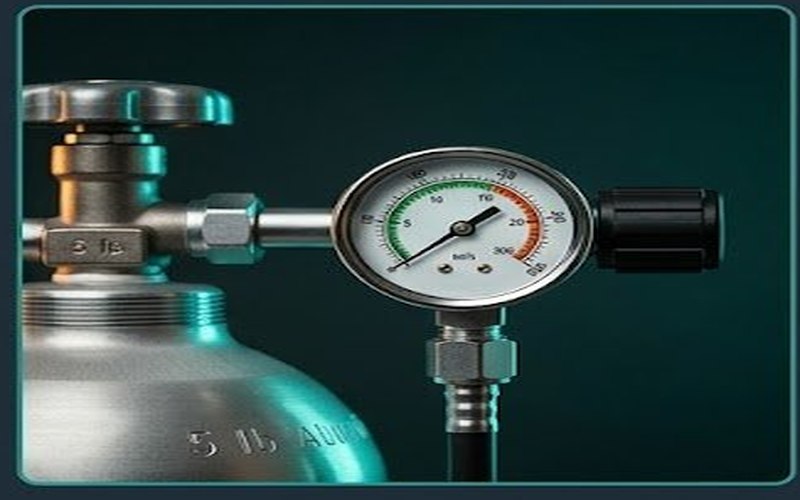
Quick Reference: PSI Chart by Beverage
All values are at refrigerator temperature (38°F / 3°C). Warmer temperatures require higher PSI for the same carbonation level — see the temperature section below.
| Beverage | CO₂ Volumes | PSI at 38°F | Carbonation Feel |
|---|---|---|---|
| Flat / Still Water | 0 | — | No bubbles |
| Lightly Sparkling Water | 1.5–2.0 | 8–10 PSI | Fine, gentle bubbles |
| Medium Sparkling Water | 2.5–3.0 | 12–16 PSI | Like San Pellegrino |
| Highly Carbonated Water | 3.5–4.5 | 18–24 PSI | Aggressive, like Topo Chico |
| Light Lager / Pilsner | 2.4–2.6 | 11–13 PSI | Crisp, clean bubble |
| American Ale / IPA | 2.2–2.6 | 10–13 PSI | Medium, lively |
| British Ales / Stouts | 1.5–2.2 | 7–11 PSI | Soft, creamy |
| Hefeweizen | 3.3–4.5 | 17–24 PSI | Very effervescent |
| Homemade Soda / Cola | 3.5–4.5 | 18–24 PSI | Like commercial soda |
| Ginger Ale / Root Beer | 3.0–4.0 | 15–22 PSI | Medium-high |
| Hard Cider | 2.5–3.0 | 12–16 PSI | Medium, fruity |
| Kombucha (first ferment) | 1.5–2.5 | 8–12 PSI | Light, natural |
| Sparkling Wine / Cava | 5.0–6.5 | 28–38 PSI | Traditional champagne |
| Cocktails / Mocktails | 2.0–3.0 | 10–16 PSI | Varies by recipe |
Understanding CO₂ Volumes: The Real Measurement
PSI is a means to an end. The actual measurement of carbonation is CO₂ volumes — the number of volumes of CO₂ gas dissolved into one volume of liquid at standard conditions.
One volume of CO₂ means that if you released all the dissolved gas from one liter of liquid, it would occupy one liter of space at atmospheric pressure. A typical commercial soda has about 3.5–4.0 volumes of CO₂. A mildly sparkling mineral water might have 2.0–2.5.
The relationship between CO₂ volumes, temperature, and PSI follows Henry's Law — a principle from physical chemistry stating that the amount of gas dissolved in a liquid is proportional to the partial pressure of that gas above the liquid. In practical terms: lower temperature = more CO₂ stays dissolved at any given pressure.
Why Temperature Changes Everything
This is the single most misunderstood aspect of home carbonation. Two people can use exactly the same PSI setting and get wildly different results — the difference is almost always temperature.
Temperature-Pressure Reference Table
This table shows the PSI required to achieve 2.5 volumes of CO₂ (standard sparkling water level) at different temperatures:
| Temperature | PSI for 2.5 Vol CO₂ | PSI for 3.5 Vol CO₂ (soda) | PSI for 4.5 Vol CO₂ (champagne) |
|---|---|---|---|
| 34°F (1°C) | 8 PSI | 13 PSI | 20 PSI |
| 38°F (3°C) | 10 PSI | 16 PSI | 24 PSI |
| 40°F (4°C) | 11 PSI | 17 PSI | 26 PSI |
| 45°F (7°C) | 14 PSI | 21 PSI | 31 PSI |
| 50°F (10°C) | 17 PSI | 26 PSI | 39 PSI |
| 55°F (13°C) | 21 PSI | 32 PSI | 48 PSI |
| 60°F (15°C) | 25 PSI | 38 PSI | 57 PSI |
| 68°F (20°C) | 34 PSI | 51 PSI | — |
🌡️ The Cold Water Rule
Always chill your liquid to near-freezing before carbonating. Water at 34°F absorbs CO₂ approximately twice as efficiently as water at 60°F. This isn't just a preference — it's physics. Cold water = less gas needed, more CO₂ absorbed, longer cylinder life.
Detailed PSI Guide by Beverage Category
Sparkling Water
Sparkling water is the most common home carbonation project, and the PSI range is forgiving. Most commercial sparkling waters fall between 2.0 and 3.0 volumes of CO₂. San Pellegrino (one of the most recognizable styles) tests around 2.5–3.0 volumes. Topo Chico fans will want to push toward 3.5–4.0 volumes for that aggressive, tingly carbonation.
Practical range for water at 38°F: 10–18 PSI
Homebrewed Beer
Beer carbonation targets vary significantly by style. The BJCP (Beer Judge Certification Program) style guidelines specify acceptable CO₂ volumes for every beer style, which is a useful reference for homebrewers. Key rules of thumb:
- British real ales served from cask: 0.75–1.3 volumes (minimal carbonation)
- Most American ales: 2.2–2.6 volumes at 38°F = 10–13 PSI
- Lagers and pilsners: 2.4–2.6 volumes = 11–13 PSI
- Hefeweizens and highly carbonated styles: 3.3–4.5 volumes = 17–24 PSI
Homemade Soda
Commercial sodas are highly carbonated by design — that bite is part of the flavor profile, especially for colas and ginger ales. Targeting 3.5–4.5 volumes of CO₂ at 38°F requires 18–24 PSI. If your homemade soda feels flat compared to store-bought, you're almost certainly under the 3.5 volumes mark. Turn up the pressure and give it another 24 hours in the keg.
Kombucha
Kombucha is already naturally carbonated through fermentation, so force carbonation is usually used to top up carbonation rather than create it from scratch. Over-carbonating kombucha in sealed bottles is a genuine safety concern (bottle bombs), so if you're force-carbonating kombucha in a keg, keep it at the lower end: 1.5–2.5 volumes = 8–12 PSI. See our Kombucha Carbonation Guide for the full process.
Sparkling Wine and Cider
Traditional Champagne has 5–6 volumes of CO₂ — remarkably high, and under significant bottle pressure (around 90 PSI in the bottle). Home force-carbonated sparkling wine typically targets 4–5 volumes for a Champagne-like result, or 2.5–3.5 for a Prosecco/Pet Nat style. At 38°F, that's 22–30 PSI for a traditional sparkling wine profile.
Time-to-Carbonate Estimates
How long carbonation takes depends on your method. There are three main approaches:
| Method | How It Works | Time to Full Carbonation | Best For |
|---|---|---|---|
| Set & Forget | Set to serving pressure, leave undisturbed | 5–10 days | Beer, wine, patience |
| Shake & Carbonate | Set pressure, shake keg, repeat | 12–24 hours | Soda, quick turnaround |
| Burst Carbonation | 30 PSI for 24–48 hrs, reduce to serving | 2–3 days | All beverages |
| SodaStream-style (bottles) | Multiple short bursts, shake between | 5–10 minutes | Water, quick soda |
Troubleshooting: Over and Under Carbonation
Too Flat (Under-Carbonated)
- Liquid wasn't cold enough before carbonating
- PSI was set too low for the target style
- Didn't wait long enough (especially with set & forget)
- CO₂ leak somewhere in the system (check connections with soapy water)
- Empty or near-empty CO₂ cylinder
Too Fizzy (Over-Carbonated)
- PSI set too high for the style
- Left under pressure too long at higher temperature
- Liquid was warmer than assumed when setting PSI
- Fix: vent the keg slowly by depressing the pressure relief valve in short bursts until pressure reads correctly, then let sit 24 hours before sampling
Frequently Asked Questions
What PSI should I use to carbonate sparkling water at home?
What PSI should I use for homebrewed beer?
How long does it take to carbonate a keg at serving pressure?
Can I carbonate kombucha with a CO₂ system?
Why is my home sparkling water less fizzy than store-bought?
Download: Carbonation PSI Reference Chart (Printable PDF)
All beverage types, all temperatures, on one laminator-ready page for your homebrew setup.
Download PDF