What Is Carbonation?
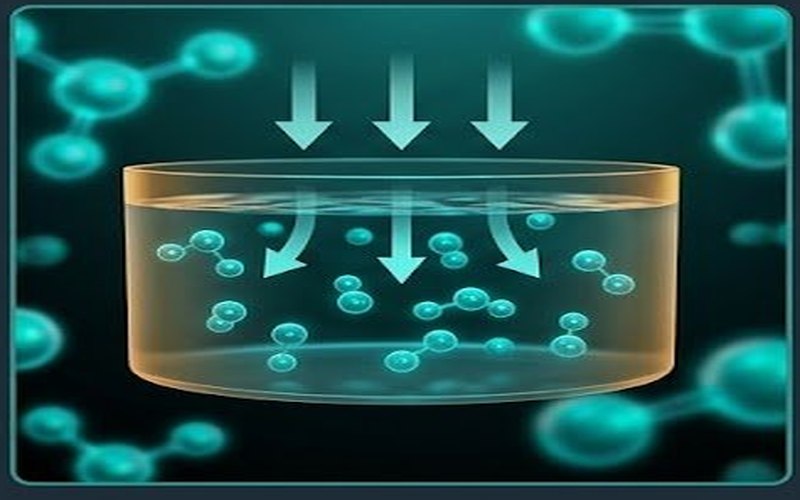
Carbonation is the process of dissolving carbon dioxide (CO₂) gas into a liquid under pressure. The result is a supersaturated solution — the liquid holds more CO₂ than it would at normal atmospheric pressure. When that pressure is released (opening a bottle, pouring a drink), the liquid can no longer hold all the CO₂, and it escapes as bubbles.
CO₂ is uniquely suited to carbonation because it dissolves in water at relatively low pressures, is chemically safe, is naturally produced by fermentation, and reacts mildly with water to form carbonic acid — the compound actually responsible for the tangy "bite" of sparkling beverages.
Henry's Law: The Core Principle
The relationship between pressure and dissolved CO₂ is governed by Henry's Law, formulated by chemist William Henry in 1803. The law states:
At a constant temperature, the concentration of a gas dissolved in a liquid is proportional to the partial pressure of that gas above the liquid.
In practical terms for home carbonation: double the pressure → double the dissolved CO₂. This is why PSI settings matter so precisely. Setting your regulator to 12 PSI instead of 10 PSI doesn't just add a little more fizz — it increases dissolved CO₂ by about 17%.
Henry's Law also explains why releasing pressure from a carbonated bottle causes CO₂ to escape: you've dropped the partial pressure of CO₂ above the liquid to essentially zero (atmospheric CO₂ is only 0.04%), so the dissolved gas rushes to re-establish equilibrium by escaping.
Temperature: The Biggest Variable
Henry's Law includes the phrase "at a constant temperature" for a reason. Temperature dramatically changes how much CO₂ a liquid can hold at any given pressure.
The solubility constant for CO₂ in water roughly doubles between 60°F (15°C) and 38°F (3°C). This means:
- Cold water (38°F) can dissolve twice as much CO₂ at 12 PSI as warm water (60°F) at 12 PSI
- To carbonate warm water to the same level, you'd need approximately twice the pressure
- Chilling your liquid before carbonating is the single highest-impact optimization
Nucleation: Why Bubbles Form Where They Do
When you pour a carbonated beverage into a glass and watch bubbles stream from specific points on the glass surface — those are nucleation sites: tiny scratches, dust particles, or imperfections in the glass where CO₂ molecules can cluster together and form the seed of a bubble.
Without nucleation sites, CO₂ would remain dissolved until the liquid was significantly agitated. In a perfectly smooth container, carbonated water can theoretically be supersaturated without forming bubbles at all — a phenomenon called supersolubility. In practice, glassware always has enough micro-scratches to provide nucleation.
This is why dropping sugar, salt, or a rough object into a soda causes a sudden eruption of foam — you've just created millions of new nucleation sites simultaneously, all releasing CO₂ at once. (And why the Mentos-in-cola experiment works so dramatically: Mentos have an extremely rough, porous surface.)
Natural Carbonation vs. Force Carbonation
There are two fundamentally different ways to carbonate a beverage:
Force Carbonation
Dissolving CO₂ directly into the liquid under pressure using a CO₂ cylinder and either a SodaStream machine, a keg system, or a carbonation cap. This is the method used for virtually all commercial sparkling water and sodas. The CO₂ has no flavor contribution; it's purely a carbonation vehicle.
Force carbonation gives you precise control over carbonation level, works within minutes to hours, and produces a consistent result. The tradeoff is equipment cost and CO₂ supply logistics.
Natural Carbonation (Fermentation)
Yeast converts sugar to CO₂ as a byproduct of fermentation. In a sealed container, this CO₂ dissolves into the liquid rather than escaping — producing natural carbonation. This is how traditional sodas, kombucha, kefir water, Belgian ales, Champagne, and cider are carbonated.
Natural carbonation produces a distinctly different bubble quality — finer, more persistent bubbles with a slightly different mouthfeel — and adds fermentation flavor compounds. The tradeoff is lower precision (hard to know exact CO₂ level without testing) and safety considerations (bottles can over-pressurize if fermentation continues).
Why Carbonation Changes How Beverages Taste
Carbonation isn't just visual. It fundamentally changes the sensory experience of a beverage through several mechanisms:
- Carbonic acid bite: CO₂ dissolved in water forms carbonic acid (H₂CO₃), which lowers the pH slightly and creates the distinctive tangy sharpness of sparkling beverages. This is a real acidic sensation, not just bubbles.
- Tactile sensation: Bubbles physically stimulate the tongue and palate, adding a textural dimension absent from still drinks. Higher carbonation = more stimulation.
- Flavor perception: Carbonation suppresses some sweet notes and amplifies bitter and acidic ones, which is why sodas taste very sweet when flat and more balanced when carbonated. This also affects how we perceive bitterness in beer — carbonation level is part of the craft brewer's flavor design.
- Aroma delivery: Bubbles carry volatile aroma compounds to the surface, enhancing the olfactory experience of the beverage. This is particularly noticeable with craft sodas made from fresh herbs or citrus.