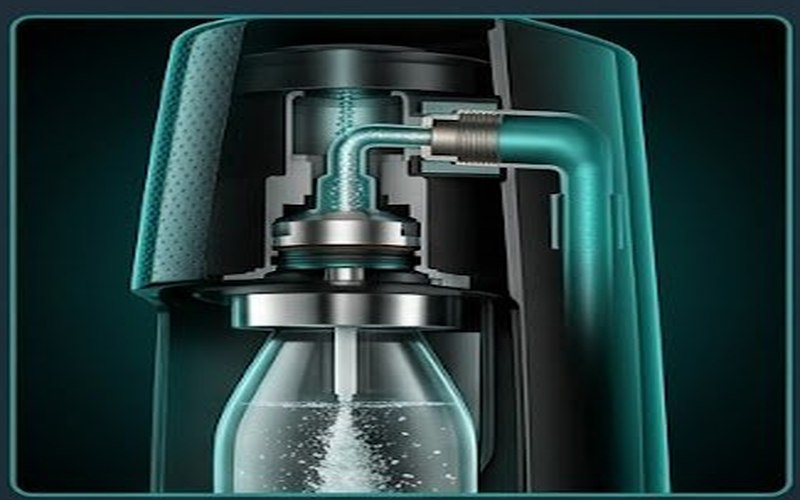
What Is Force Carbonation?
Force carbonation means directly injecting CO₂ gas into a liquid under pressure, rather than waiting for yeast to produce CO₂ naturally through fermentation. The CO₂ dissolves into the liquid following Henry's Law: the higher the pressure and the colder the liquid, the more CO₂ dissolves.
Force carbonation gives you:
- Speed — minutes to hours instead of days to weeks
- Precision — exact carbonation level you want, every time
- Control — easy to adjust up or down
- Consistency — same result batch after batch
The tradeoff vs. natural carbonation: you need CO₂ supply and equipment. But for sparkling water, craft sodas, and most home kegging, force carbonation is dramatically more practical.
Before You Start: The Cold Rule
This is the single most important preparation step, regardless of which method you use:
Other pre-carbonation checks:
- Inspect all connections for leaks (soapy water test on regulator threads, hose connections)
- Verify your CO₂ cylinder has adequate gas (check weight or use a scale)
- Ensure containers are rated for the pressures you'll be using
- Use only food-safe containers — never carbonate in non-rated vessels
Method 1: SodaStream / Bottle Carbonator
The simplest entry point. A SodaStream or similar countertop machine delivers CO₂ in measured bursts directly into a bottle of water.
- Fill the bottle with cold water. Use water chilled to 34–40°F. Fill to the max fill line (usually about 80% full, leaving headspace).
- Attach the bottle to the machine. Screw or snap the bottle into the machine's carbonation port — it seals automatically.
- Press the carbonation button in short bursts. Press for 2–3 seconds, release, wait 2 seconds. You should feel resistance and hear a hissing sound when you press. Repeat 3–5 times for medium carbonation.
- Check for the buzz/indicator. Most machines have a buzzer or visual indicator that signals you've reached optimal pressure for that machine's setting.
- Release the bottle carefully. Tilt the bottle slightly before removing to gently release any over-pressure. Then unscrew or unclip.
- Let the carbonation settle for 30–60 seconds before opening. This gives dissolved CO₂ time to stabilize in the liquid.
For different carbonation levels with a SodaStream:
- Light fizz: 2–3 bursts
- Medium (standard): 4–5 bursts
- High (Topo Chico style): 6–8 bursts, plus extra shaking between bursts
Method 2: Keg Carbonation — Set & Forget
The most hands-off method for kegged beverages. Connect CO₂, set the pressure, and come back in a week.
- Fill and seal your keg. Leave 15–20% headspace. Seal the lid and purge any oxygen by briefly pressing the pressure relief valve, then pressurizing to 2–3 PSI and venting several times.
- Pre-chill the filled keg. Place in your refrigerator or keezer for at least 12 hours. The liquid must be cold before connecting serving pressure.
- Set regulator to serving/carbonation pressure. Refer to the PSI chart or use the calculator for your beverage and temperature. For most ales at 38°F: 10–13 PSI. For sodas: 18–24 PSI.
- Connect CO₂ and leave undisturbed. Do not move or shake the keg. CO₂ absorbs into liquid slowly at serving pressure — agitation disrupts the process.
- Wait 5–7 days, then sample. Draw a small pour. If under-carbonated, reseal, wait another 2–3 days. If over-carbonated, vent excess pressure via the relief valve and wait 24 hours.
This method produces the cleanest carbonation — fine, even bubbles with good head retention on beer.
Method 3: Keg — Shake Carbonation
Agitating the keg while pressurized dramatically increases the surface area between gas and liquid, accelerating CO₂ absorption. Full carbonation in 1–4 hours instead of 5–7 days.
- Pre-chill and seal your keg as in Method 2.
- Set pressure to your serving PSI. (Not higher — you want to carbonation to the serving level, not over-carbonate.)
- Lay the keg on its side and roll/shake vigorously for 2–3 minutes. You'll hear/feel the CO₂ absorbing as the gas sound diminishes.
- Re-pressurize if needed. Check the regulator — if pressure has dropped significantly, the CO₂ has absorbed. Re-pressurize to serving PSI.
- Repeat 3–4 cycles until the pressure holds steady (the keg stops absorbing gas quickly).
- Return to upright and chill 1–2 hours before sampling. Shake carbonation can produce slightly larger bubbles initially; a rest period smooths this out.
Method 4: Burst Carbonation
The best of both worlds: faster than set-and-forget, cleaner bubble quality than shake. Set a higher pressure for 24–48 hours, then reduce to serving pressure.
- Pre-chill the filled, sealed keg for 12+ hours.
- Set regulator to burst pressure: 28–32 PSI. This is higher than serving pressure but well within keg limits (most ball-lock kegs are rated for 130 PSI).
- Leave undisturbed for 24–48 hours at refrigerator temperature. The elevated pressure accelerates CO₂ absorption without shaking.
- Reduce pressure to serving PSI (10–20 PSI depending on beverage). Do this by adjusting the regulator down and venting excess through the relief valve.
- Wait 24 hours at serving pressure before drawing a sample. This allows carbonation to equilibrate evenly throughout the liquid.
Method 5: Carbonation Caps on PET Bottles
A CGA-320 carbonation cap threads onto standard PET bottle necks and allows you to carbonate directly with a CO₂ source. Excellent for small batches of cocktails, flavored sodas, or beverages you don't want to run through a SodaStream machine.
- Fill a PET bottle (1–2L) to about 80% full with your chilled beverage.
- Squeeze the bottle to remove as much headspace air as possible, then quickly cap with the carbonation cap attached to your CO₂ line.
- Pressurize to target PSI (see PSI chart), then shake vigorously for 1–2 minutes.
- Disconnect, chill, and wait 30 minutes before opening. The CO₂ will continue absorbing while cold.
Carbonation caps work with 1L, 1.5L, and 2L bottles. A kit with caps and a short CO₂ hose runs $15–$25 and is invaluable for batch cocktail carbonation.
Quick PSI & Volume Reference
| Beverage | CO₂ Volumes | PSI at 38°F | Best Method |
|---|---|---|---|
| Sparkling Water (medium) | 2.5–3.0 | 12–16 PSI | SodaStream or Set & Forget |
| Most Ales / IPA | 2.2–2.6 | 10–13 PSI | Set & Forget or Burst |
| Lager / Pilsner | 2.4–2.6 | 11–13 PSI | Set & Forget |
| Homemade Cola / Soda | 3.5–4.5 | 18–24 PSI | Shake or Burst |
| Ginger Beer | 3.0–4.0 | 15–22 PSI | Shake or Carb Cap |
| Carbonated Cocktails | 2.5–3.5 | 12–18 PSI | Carb Cap or Keg |
| Hard Cider | 2.5–3.0 | 12–16 PSI | Set & Forget or Burst |
Use the Carbonation Calculator for exact PSI at your specific temperature.
Troubleshooting Force Carbonation
Problem: Beverage is flat after the full wait time
- Temperature too warm — liquid wasn't cold enough when carbonating
- CO₂ leak — check all connections with soapy water
- Empty or nearly empty CO₂ cylinder
- PSI set too low for the target style
- Keg lid not fully sealed — depressurize, recheck the O-ring, re-pressurize
Problem: Beverage is over-carbonated / too foamy when pouring
- PSI was set too high for serving
- Left under pressure too long at warmer temperature than expected
- Fix: vent keg slowly via relief valve, reduce to serving PSI, wait 24 hours
- For SodaStream: fewer bursts next time, or chill the bottle longer
Problem: Carbonation is inconsistent — fizzy at first, then flat
- Liquid temperature varied during carbonation (partially warm, partially cold)
- For keg: keg was moved/shaken after set-and-forget carbonation, disturbing the dissolved gas equilibrium
- Fix: re-carbonate at proper temperature, don't move the keg during carbonation