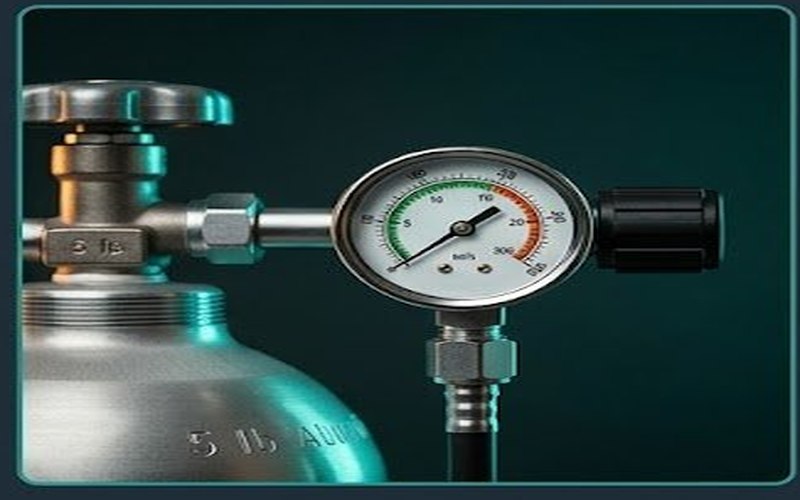
CO₂ at Home: What You're Actually Working With
Carbon dioxide (CO₂) is a naturally occurring gas that makes up about 0.04% (420 parts per million) of outdoor air. You exhale it with every breath. It's also the gas that makes your soda fizzy, your beer carbonated, and your sparkling water sparkle.
At the concentrations involved in normal home carbonation use, CO₂ is not toxic. It becomes a hazard only when it accumulates to high enough concentrations to displace the oxygen you need to breathe — a condition called asphyxiation by oxygen displacement. This is distinct from CO (carbon monoxide), which is a chemical toxin. CO₂ doesn't poison you; it suffocates by diluting the oxygen in a room.
| CO₂ Concentration (ppm) | Source / Context | Effect on People |
|---|---|---|
| 420 ppm | Outdoor air (2025 average) | None — normal baseline |
| 800–1,000 ppm | Typical occupied indoor room | None measurable |
| 1,000–2,000 ppm | Poorly ventilated room, many people | Mild fatigue possible in sensitive individuals |
| 2,000–5,000 ppm | OSHA elevated limit (workplace) | Headache, dizziness, restlessness possible |
| 5,000 ppm | OSHA permissible exposure limit (8-hr) | Noticeably impaired judgment, discomfort |
| 10,000–30,000 ppm | Serious accumulation scenario | Rapid breathing, confusion, inability to concentrate |
| >40,000 ppm (4%) | Confined space emergency | Rapid unconsciousness, life-threatening |
The Real Risk Assessment for Home Use
Understanding the real risk requires knowing how much CO₂ your equipment actually releases. Let's run the numbers.
SodaStream / 60L Cylinders
A standard 60L cylinder contains approximately 14.5 oz (410g) of CO₂. If this entire cylinder were to discharge instantly into a small, sealed 10×10×8 ft room (800 cubic feet), the CO₂ concentration would reach approximately 1,800 ppm — well within the range where no acute health effects occur, and far below any dangerous threshold.
During normal use, a single carbonation event releases a fraction of a gram of CO₂ into a ventilated living space. The risk is negligible.
5 lb Homebrew CO₂ Tanks
A 5 lb CO₂ tank contains roughly 2,270g of CO₂. In the same sealed 800 cubic foot room, complete release would reach approximately 20,000 ppm — a concerning level that could cause dizziness and distress. This scenario requires a massive simultaneous leak in a completely sealed room, but it's worth knowing.
For typical kegging use in a garage, basement, or kitchen with any normal air exchange, this risk is not meaningful during operation. The more important scenario is an undetected slow leak in a confined, low-lying area (CO₂ is heavier than air and accumulates near the floor).
Ventilation Requirements: What's Actually Needed
You'll see recommendations online ranging from "no special ventilation needed" to "install a CO₂ monitor and dedicated exhaust fan." Here's a calibrated answer:
Standard Kitchen / Living Space Use
For SodaStream machines and similar countertop carbonators used in normally occupied, normally ventilated living spaces: no special ventilation is required. Normal air exchange through HVAC, windows, and human traffic is more than sufficient to dilute any CO₂ released during carbonation.
Homebrew Kegging in Enclosed Spaces
If you're storing a 5 lb or larger CO₂ tank in a basement, crawlspace, garage kegerator, or under-counter setup with limited ventilation, consider:
- Ensure the space has some air exchange — even a small gap under a door is meaningful
- Don't store large tanks in completely sealed areas like closets without any airflow
- A CO₂ leak detector (available for $30–$80) provides peace of mind for dedicated keezer/kegging setups
- Periodic visual inspection of all connections with soapy water reveals slow leaks before they accumulate
What a CO₂ Monitor Is (and Isn't)
Household CO₂ monitors (IAQ monitors) are designed to measure indoor air quality levels — typically in the 400–5,000 ppm range. They'll alert you if CO₂ levels are rising above comfortable thresholds. They are not the same as dedicated confined-space gas detectors used industrially. For a typical home kegging setup, a standard IAQ monitor is a reasonable, proportionate safety measure — not a necessity, but a sensible addition.
Warning Signs of CO₂ Buildup
Know these symptoms. If you experience them in the space where your CO₂ equipment is stored, take them seriously:
-
1
Headache or pressure behind the eyes — Often the first sign at 1,500–2,500 ppm in a sealed area. Can easily be mistaken for a regular headache.
-
2
Dizziness, lightheadedness, fatigue — At elevated concentrations. Particularly notable if symptoms resolve when you leave the area.
-
3
Rapid, labored breathing — Your body's automatic response to high CO₂ levels. A significant warning sign.
-
!
Confusion, inability to think clearly — A serious sign. Exit the space immediately and get fresh air. Do not re-enter until the space is ventilated.
Safe Storage Practices
Proper storage is where most home CO₂ safety is won or lost.
Always Upright
Store CO₂ cylinders in an upright, vertical position. CO₂ is stored as a liquid under pressure; tipping the cylinder can allow liquid CO₂ (rather than gas) to enter the regulator, potentially damaging it or causing an uncontrolled release.
Secure Against Falling
A falling CO₂ tank can shear the valve — the single most dangerous failure mode for any compressed gas cylinder. Even small tanks should be secured to a wall, shelf, or dedicated tank stand with a chain or strap.
Away From Heat Sources
CO₂ pressure increases significantly with temperature. Keep tanks away from radiators, direct sunlight through windows, and heat-producing appliances. The maximum safe storage temperature for most CO₂ cylinders is 125°F (52°C) — well above normal room temperature, but worth keeping in mind for garages in hot climates.
Valve Protection
When a cylinder is not connected to equipment and being moved or transported, keep the protective cap on the valve. This prevents accidental valve damage.
Check the Test Date
Look at the collar of your cylinder for a stamped date (format: MM/YY). This is the last hydrostatic test date. Aluminum cylinders must be retested every 5 years. Don't use or refill a cylinder past its test date until it has been inspected and recertified.
Special Considerations for Large Tanks (10 lb and Up)
Most home users work with 5 lb or smaller tanks. If you've graduated to a 10 lb, 20 lb, or larger tank for a serious kegging setup, the same principles apply but with proportionally more attention to storage location and leak detection.
- A 20 lb CO₂ tank in a sealed basement would pose a meaningful accumulation risk in a worst-case full-release scenario
- A dedicated CO₂ monitor is a reasonable investment for these setups
- Inspect all connections (tank valve, regulator, tubing connections) at least monthly with soapy water
- Keep a note of your tank weight so you can verify it's not losing CO₂ slowly when not in use
CO₂ Safety Checklist
Print this and keep it with your equipment.
🔒 CO₂ Home Safety Checklist
- ☐ Cylinder stored upright at all times
- ☐ Cylinder secured against accidental tipping (chain, strap, or stand)
- ☐ Valve cap in place when cylinder is not in use/connected
- ☐ Storage area has some air exchange (not completely sealed)
- ☐ Cylinder stored away from heat sources and direct sun
- ☐ Hydrostatic test date checked — within 5 years for aluminum
- ☐ No visible dents, rust, or damage on cylinder body
- ☐ All connections checked with soapy water for leaks monthly
- ☐ CO₂ is turned off at the tank valve when not actively in use
- ☐ Anyone using the equipment knows the warning signs of CO₂ buildup
Download: Home Carbonation Quick-Start Kit PDF
Includes this checklist, PSI reference chart, cylinder inspection guide, and beginner syrup ratios — all in a printable format.
Download Free PDF