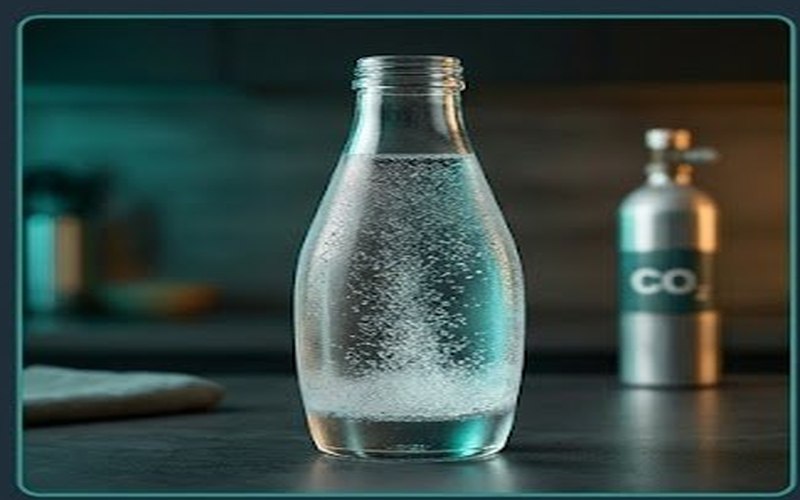
Drinkmate OmniFizz — Carbonate Any Beverage
Unlike standard SodaStream machines, the Drinkmate OmniFizz is designed to safely carbonate any liquid — juice, wine, cocktails, cold brew — not just water. Uses standard 60L CO₂ cylinders and third-party refills.
View on Amazon →As an Amazon Associate, FizzHomeLab earns from qualifying purchases.
Why SodaStream Says Water Only
SodaStream's "water only" instruction is a combination of three things: genuine equipment limitation, warranty protection, and litigation risk management. The standard SodaStream machines (Terra, Art, Duo) have a carbonation nozzle positioned at the bottom of the bottle port. When you press the button, CO₂ is injected directly into the liquid. For still water, this works perfectly. For anything with dissolved sugars, proteins, pulp, or high carbonation affinity, the rapid CO₂ injection can cause instant, violent foam eruption — the liquid foams up into the machine's internal components, which are not designed to handle it.
This is a real and practical limitation of the SodaStream design, not just a conservative disclaimer. The fix — for carbonating anything other than plain water — is to use a different method: carbonation caps on PET bottles, a keg system, or an iSi-style CO₂ dispenser. These methods give you control over pressurization speed and allow any liquid to be carbonated safely.
Liquids That Carbonate Beautifully
Plain Water
The reference standard. CO₂ dissolves cleanly, carbonation is predictable and adjustable, and the results are consistent. See the PSI chart and calculator for exact targets.
Mineral Water (With Added Minerals)
Adding mineral salts (calcium chloride, magnesium chloride, sodium bicarbonate) to filtered water before carbonating produces results that closely match commercial mineral sparkling waters. The CO₂ behaves identically to plain water; the minerals only affect taste and mouthfeel. See the water quality guide for specific mineral profiles.
Spirits and Cocktail Bases
Vodka, gin, clear rum, and tequila-based cocktail pre-mixes carbonate cleanly using a keg or carbonation cap. The alcohol and water in spirits dissolve CO₂ well, and the results are excellent. See the cocktail carbonation guide for PSI targets and batch recipes. The specific spirits that work well and those to approach cautiously are covered there in detail.
Iced Tea (Unsweetened or Lightly Sweetened)
Cold-brewed black or green tea carbonates surprisingly well. Use a carbonation cap or keg; never a SodaStream machine (foam risk). Lightly sweetened carbonated tea is essentially a homemade version of drinks like Sparkling Ice or GT's Kombucha lite. Target 2.5–3.0 volumes CO₂ at 38°F (12–16 PSI). The CO₂ brightens the tea's astringency in a pleasant way.
Cold Brew Coffee
Nitro cold brew is made with nitrogen, not CO₂, but CO₂-carbonated cold brew is its own excellent drink — the carbonation amplifies the coffee's brightness and acidity in a way that works well with light roasts. Use a keg or carbonation cap at 2.5–3.0 volumes (12–16 PSI at 38°F). The coffee must be very cold and very smooth — any residual fine grounds will nucleate aggressively. Cold brew (not hot-brewed cooled coffee) is the right base; hot-brewed coffee has a different acid profile that tastes harsh when carbonated.
Kombucha
CO₂ force-carbonation is used to top up or standardize kombucha carbonation after the second ferment. Because kombucha contains live cultures that continue producing CO₂, use lower target pressures (8–12 PSI at 38°F, 1.5–2.5 volumes). See the kombucha carbonation guide for the complete process including safety considerations.
Liquids That Work With Caveats
Fruit Juice (Citrus and High-Acid)
Fresh orange juice, lemon juice, grapefruit juice — these carbonate well chemically. The carbonic acid adds to the existing citric acid to create a sharp, bright, genuinely good sparkling juice. The caveats:
- Must use a keg or carbonation cap — juice foams violently in a SodaStream machine
- Pulp must be strained out — pulp creates excessive nucleation sites that cause explosive foam when pressurized, and will clog dispensing equipment
- Use same-day juice — carbonation amplifies any off-notes from aging juice
- Target lower carbonation (2.0–2.5 volumes, 10–12 PSI at 38°F) to prevent over-aggressive bubble release when opened
Sparkling orange juice is commercially available (most famously as Ceres and similar brands) and genuinely popular. Home-made is better when done right.
Apple Juice / Cider
Clear filtered apple juice carbonates very cleanly — it is essentially what sparkling cider is before fermentation. Target 2.5–3.5 volumes CO₂. The natural sugars in apple juice pair beautifully with carbonation. Cloudy or unfiltered apple juice can be carbonated but has a higher nucleation risk from suspended solids; strain thoroughly first.
Grape Juice / Still Wine
Both work with a keg or carbonation cap. Still wine force-carbonated to 2.5–4.0 volumes produces a reasonable sparkling wine approximation. The main caveat: force-carbonating a wine with residual sugar produces different bubble behavior and taste than wine carbonated through fermentation. Dry wines carbonate more cleanly than sweet wines for this reason. See the wine section below for more detail.
Coconut Water
Coconut water carbonates well and tastes genuinely good carbonated — the natural sweetness and slight minerality pair well with CO₂'s tartness. Use a keg or carbonation cap at 2.5–3.0 volumes (12–15 PSI at 38°F). Avoid carbonating coconut milk (the thick, high-fat version) — fat does not carbonate well and separates under CO₂ pressure.
Sports Drinks and Electrolyte Water
Plain electrolyte water (low sugar) carbonates fine and is used commercially (Gatorade has sold carbonated versions). Highly sweetened sports drinks foam more aggressively and require slow pressurization. Use a keg at low PSI and increase gradually rather than injecting at full pressure.
Liquids to Avoid Carbonating
| Liquid | Avoid? | Reason |
|---|---|---|
| Full-fat dairy milk | ❌ Avoid | Protein denaturation, curdling, unpleasant taste for most people |
| Cream / heavy cream | ❌ Avoid | Fat separates immediately under CO₂ pressure |
| Egg-based drinks | ❌ Avoid | Protein foams catastrophically — creates a pressurized mess |
| Thick smoothies / blended fruit | ❌ Avoid | Pulp and fiber create uncontrollable nucleation and clogging |
| Hot liquids (above 60°F) | ❌ Avoid | CO₂ solubility plummets; most CO₂ escapes before dissolving |
| Already-carbonated beverages | ⚠️ Skip | Re-carbonating adds pressure to an already-saturated liquid — over-pressurization risk |
| Vinegar at full strength | ⚠️ Skip | High acidity reacts with CO₂ differently; use diluted shrubs instead |
The Milk Question in Full
Carbonated milk gets asked about constantly, and the honest answer is: technically yes, practically questionable, commercially proven to fail at scale.
CO₂ does dissolve into milk — the carbonation itself is not the problem. The issue is what happens chemically. When carbonic acid forms in milk, it lowers the pH slightly. Milk proteins — primarily casein — are stable at milk's natural pH of around 6.6, but they begin to partially denature and aggregate as pH drops. This produces a mildly curdled texture: not fully curdled like aged cheese, but slightly grainy or lumpy on the tongue. The taste is often described as sour, tangy, or oddly cheese-like.
Coca-Cola tested this extensively with a product called Vio (launched 2009, discontinued 2010). Nestlé has also released carbonated milk products in various markets, with mixed reception. The product exists; the mass market has consistently found the taste combination unappealing.
There are exceptions: plant-based milks (oat, almond, soy) carbonate significantly more cleanly than dairy milk because they lack casein proteins. Carbonated oat milk in particular has a surprisingly pleasant flavor — the CO₂ lightens the creaminess and the result is somewhat like a sparkling cream soda. If you want to experiment, start with oat milk rather than dairy.
Carbonating Juice: The Practical Guide
Juice carbonation is one of the most rewarding non-water carbonation experiments. The process requires a bit more care than plain water, but the results — fresh, sparkling citrus juice with none of the flat sweetness of commercial juice — are genuinely impressive.
The Method That Works
Use a 1L PET bottle with a carbonation cap, or a small Cornelius keg. Do not use a SodaStream machine.
- Strain the juice completely. Any pulp or fine particles cause explosive nucleation. Pass fresh-squeezed juice through a fine-mesh strainer or coffee filter until it runs clear. This step is non-negotiable.
- Chill to 35–38°F. Same rule as water — cold juice absorbs CO₂ more efficiently and foams less aggressively during pressurization.
- Pressurize slowly. For a carbonation cap: pressurize to 10 PSI, release, shake gently, pressurize to 20 PSI, then refrigerate for 20 minutes before adding more pressure. The slow increase prevents foam eruption.
- Target 2.0–2.5 volumes CO₂ for juice — lower than sparkling water because the natural acids in juice already contribute significant tartness. Over-carbonating citrus juice makes it unpleasantly sharp.
- Open very slowly over a sink the first time. Juice releases CO₂ more aggressively than plain water when opened.
The best juices to start with: white grape juice (clean, sweet, carbonates beautifully), filtered apple juice, and lightly diluted citrus juice (1 part fresh OJ to 1 part water — reduces foaming while keeping the flavor).
Carbonating Still Wine at Home
Force-carbonating still wine into a sparkling approximation is a legitimate technique and it works. The caveats are mainly about taste expectations: force-carbonated wine tastes different from wine carbonated through in-bottle fermentation (like traditional Champagne) or through natural pétillance. This is not better or worse — it is different.
Best results come from dry wines with higher acidity: Sauvignon Blanc, Albariño, Pinot Grigio, dry rosé. The CO₂ sharpens the acidity pleasingly. Rich, oaky, or very sweet wines (Chardonnay, Riesling Spätlese) tend to taste unbalanced when force-carbonated — the CO₂ makes them simultaneously too tart and too sweet.
PSI targets for still wine: 14–20 PSI at 38°F for a light-to-medium sparkling style (2.5–3.5 volumes CO₂). For a more Champagne-like result, push to 25–30 PSI (4.5–5.0 volumes). Use a keg system, never a SodaStream machine.
Carbonating Cold Brew Coffee
CO₂-carbonated cold brew is genuinely excellent and underrated. The carbonation amplifies cold brew's natural brightness without adding sweetness, making it taste crisper and more complex than still cold brew. Light and medium roasts work best — the carbonation enhances floral and citrus notes. Dark roasts can taste overly bitter when carbonated because CO₂ amplifies existing bitterness.
The key variables:
- Use cold brew, not hot-brewed coffee. Hot-brew extracts more acidic compounds that taste harsh when carbonated with carbonic acid. Cold brew's lower acid content produces a balanced result.
- Filter completely. Even fine coffee grounds create excessive nucleation. Use a paper filter after your normal cold brew filter for best results.
- Target 2.5–3.0 volumes CO₂ (12–16 PSI at 38°F). Higher carbonation produces a sharp, aggressive bite that overwhelms the coffee flavor.
- Serve very cold. Carbonated coffee at 45°F+ dissipates quickly and tastes flat within minutes. Serve straight from the refrigerator, ideally in a pre-chilled glass.
Commercial nitro cold brew uses nitrogen for its creamy texture and slow, cascading pour. CO₂ carbonated cold brew has a different, crispier character. Neither is better — they are genuinely different drinks from the same base.
Which Equipment to Use for Non-Water Liquids
| Liquid Type | SodaStream Machine | Carbonation Cap (PET) | Keg System |
|---|---|---|---|
| Plain water | ✅ Best option | ✅ Works | ✅ Works |
| Filtered/mineral water | ✅ Best option | ✅ Works | ✅ Works |
| Strained juice (no pulp) | ❌ Don't use | ✅ Best option | ✅ Works |
| Cocktail bases, spirits | ❌ Don't use | ✅ Best option | ✅ Best for batch |
| Still wine | ❌ Don't use | ✅ Works (small batch) | ✅ Best option |
| Cold brew coffee | ❌ Don't use | ✅ Works | ✅ Works |
| Kombucha | ❌ Don't use | ✅ Works | ✅ Best option |
| Plant-based milks | ❌ Don't use | ⚠️ With care | ⚠️ With care |
| Dairy milk | ❌ No | ⚠️ Experiment only | ⚠️ Experiment only |